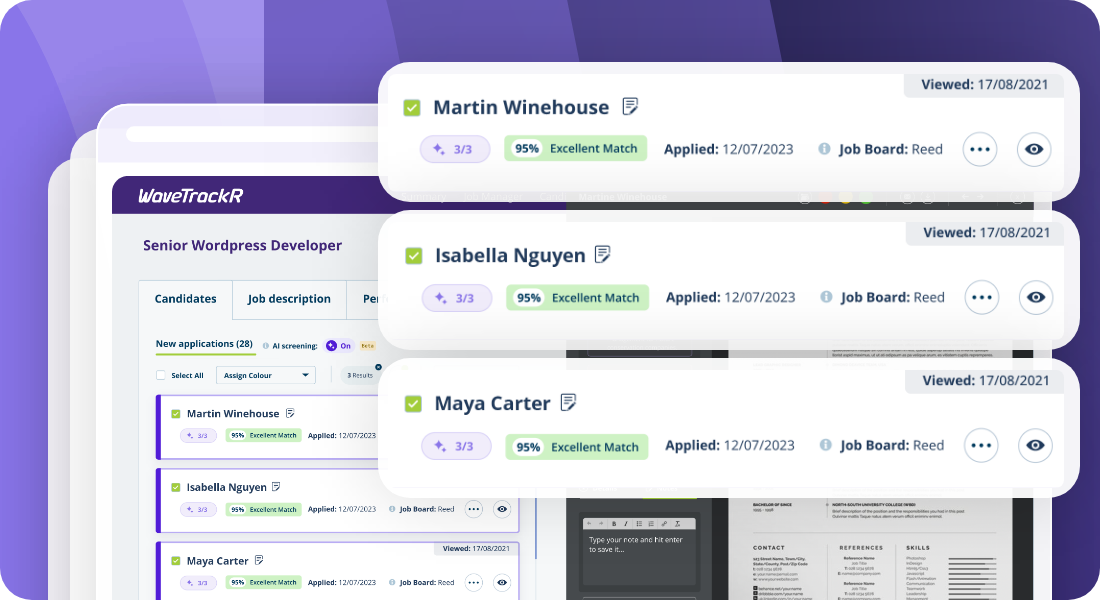
Shortlisting works best when you can spot strong candidates quickly and act with confidence.
When applications start coming in fast, the challenge isn’t attraction. It’s knowing which candidates are the best match for the role and who to prioritise first. CVs arrive in a long, chronological list, but relevance rarely follows the same order.
That’s where clearer scoring comes in.
Start With What the Role Actually Needs
Good scoring begins with the role itself. When a job is posted, its requirements define what “good” looks like. Those criteria become the benchmark against which every application is assessed, ensuring candidates are measured consistently against the same expectations.
This keeps scoring grounded in reality, not guesswork.
Turn Applications Into Clear Match Signals
As applications come in, CVs are assessed against the job requirements and given a clear percentage-based match score.
This score provides an immediate indication of fit, typically grouped into:
- Excellent match
- Good match
- Fair match
Instead of reading every CV from scratch, recruiters get an early signal that helps them understand how closely each candidate aligns with the role.
Prioritise Strong Candidates Earlier
The biggest advantage of scoring is speed. Rather than working through applications chronologically, recruiters can immediately focus on the strongest matches as soon as they apply. That means:
- Faster first contact with high-quality candidates
- Less time spent reviewing poor-fit applications
- Better chances of securing in-demand talent
In competitive markets, those early conversations can make all the difference.
Support Recruiter Judgement, Don’t Replace It
Scoring isn’t about automating hiring decisions. It’s about removing friction from the shortlisting process so recruiters can spend their time where it matters most. Scores act as a guide, not a verdict, helping teams decide where to look first and which applications need deeper review.
Recruiter expertise remains central, just backed by clearer signals.
Build Stronger Shortlists at Scale
As application volumes increase, maintaining consistency becomes harder.
Scoring ensures every candidate is assessed against the same role criteria, regardless of who is reviewing the applications. This creates:
- More consistent shortlists
- Clearer internal decision-making
- A more confident and repeatable hiring process
Clearer scores don’t just save time. They lead to stronger shortlists and better hiring outcomes.
As teams scale and application volumes increase, consistency becomes harder to maintain.
A scoring framework ensures every candidate is assessed against the same role requirements, regardless of who is reviewing the applications. That consistency leads to tighter shortlists, clearer decision-making, and a more confident hiring process overall.
Clearer scores don’t just speed things up. They make shortlists stronger.
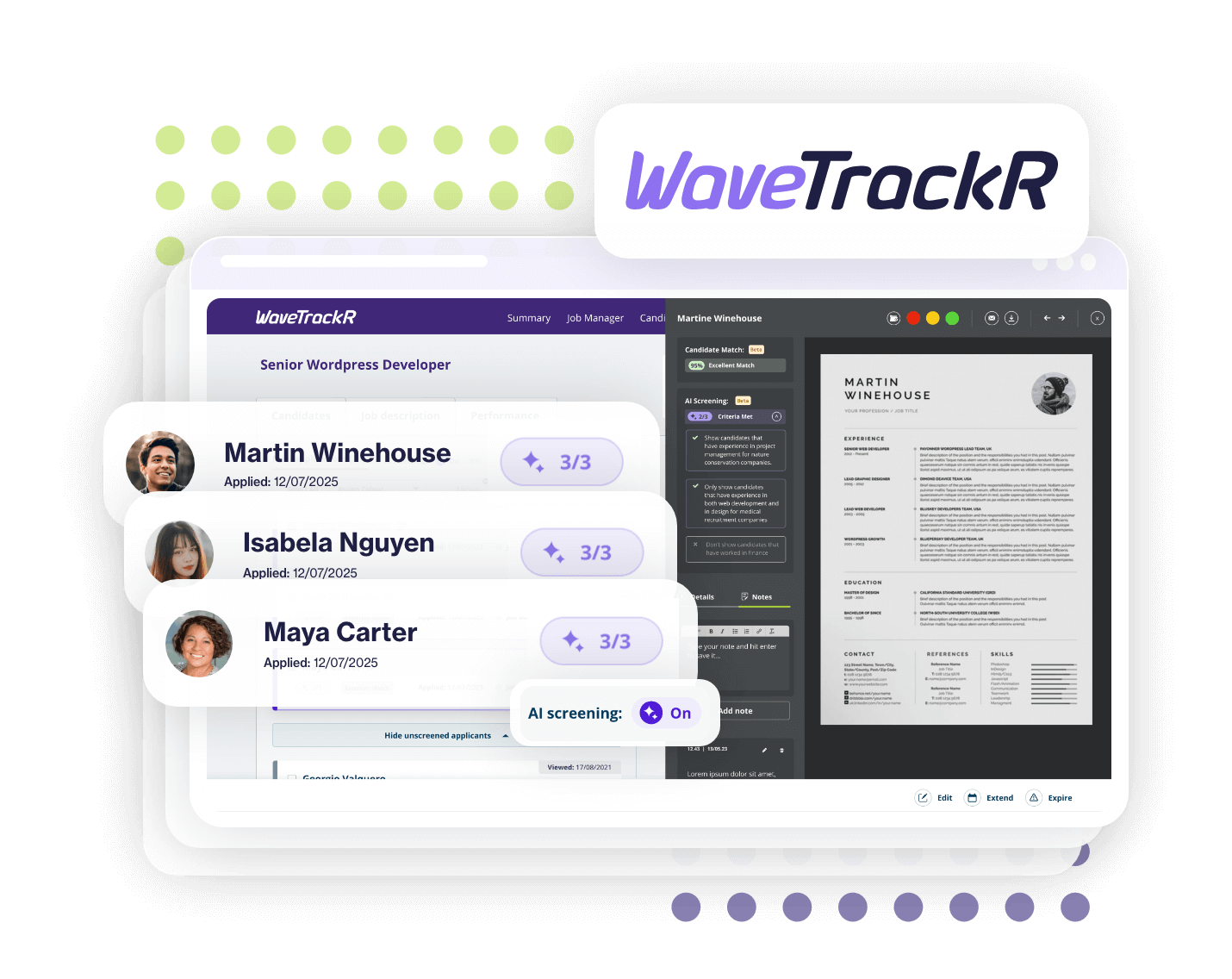
WaveTrackR helps you attract, screen and hire faster.
From job posting to shortlisting — get more done in one place.