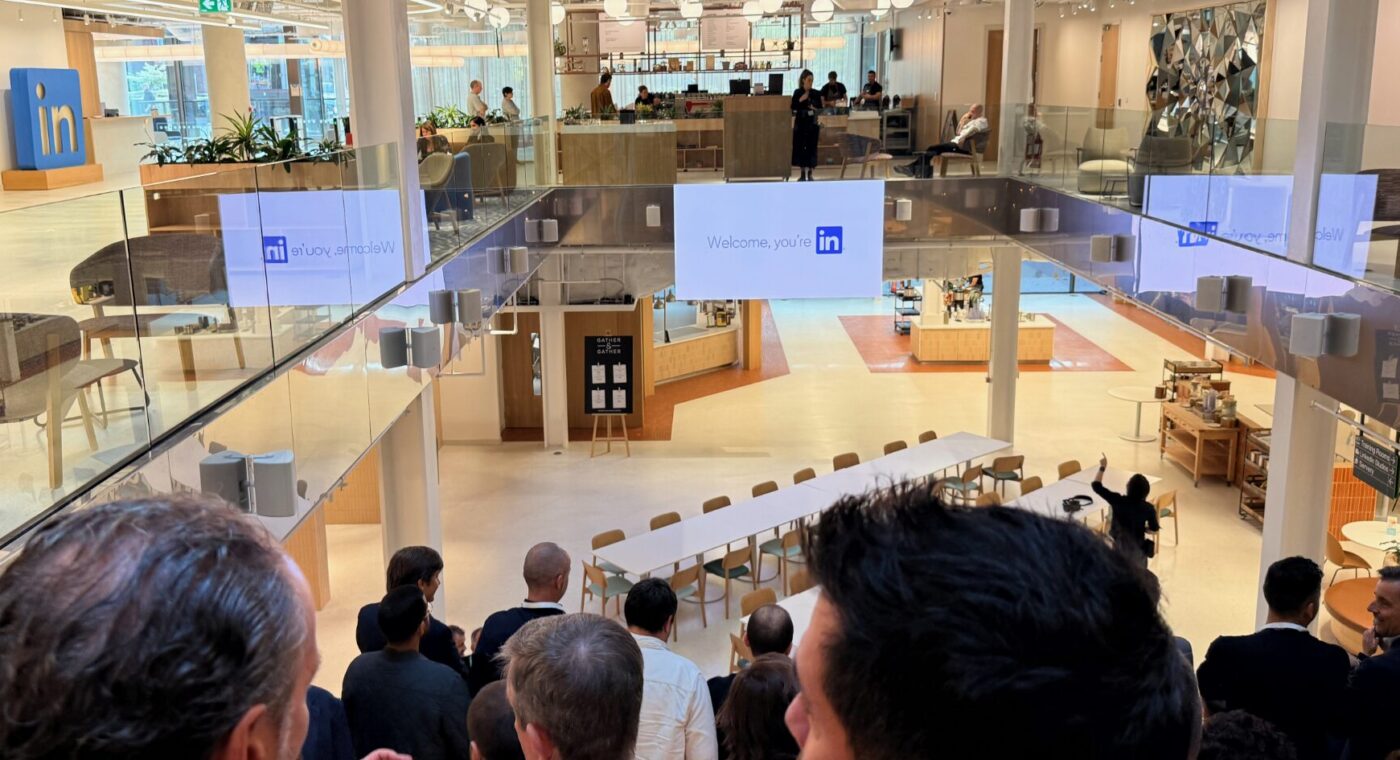
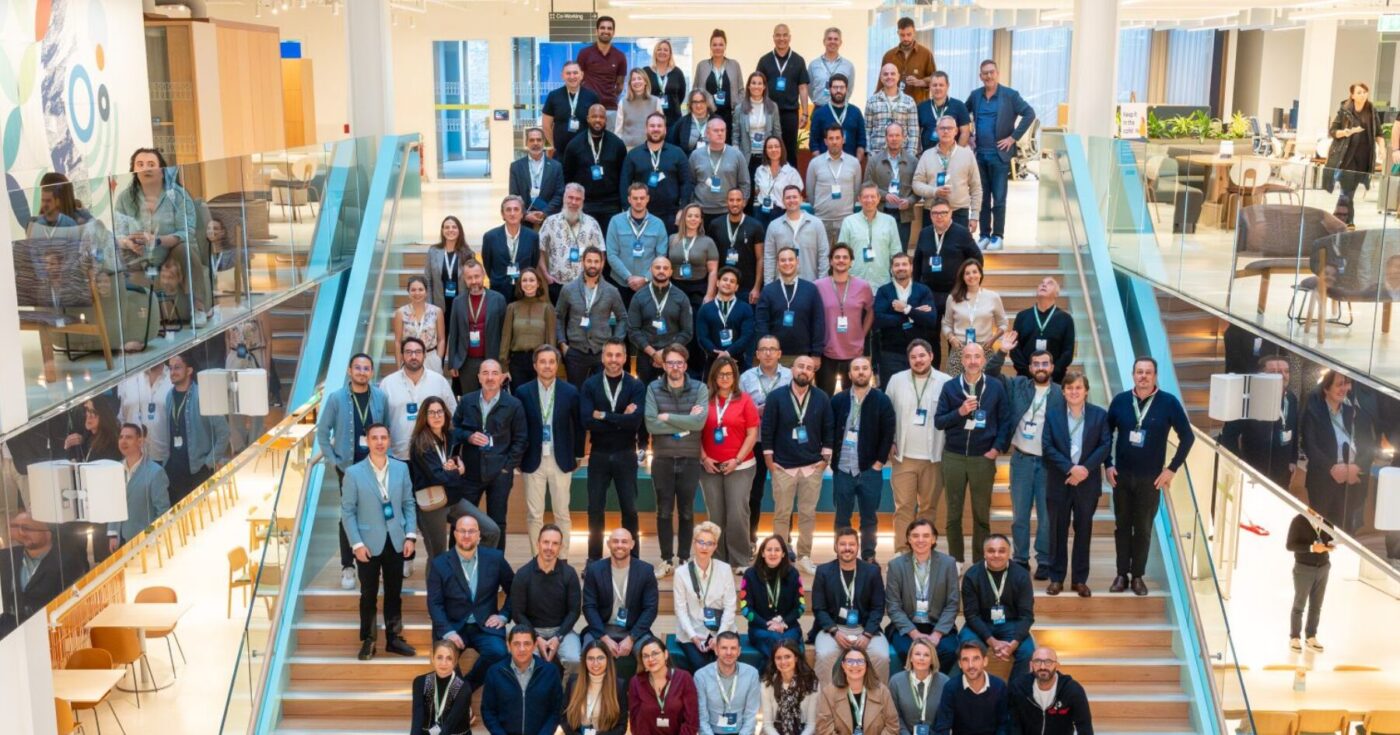
Earlier this month, LinkedIn brought together Channel Partners from EMEA and LATAM at its Dublin headquarters for LinkedIn Partners Unite 2025. Across two days filled with insight and innovation, leaders in policy, economics, product, and marketing discussed how AI is changing the world of work and what that means for the people at its center.
Beyond the presentations, the event celebrated collaboration. Partners connected over shared challenges, inspiring stories, and a memorable first evening of entertainment and networking. Underneath all the energy and conversation, one message stood out: the future of work is being rewritten not just by technology, but by the choices people make in using it.
Policy, ethics, and the new rules of AI
The event opened with a sobering and practical lens on AI’s acceleration.
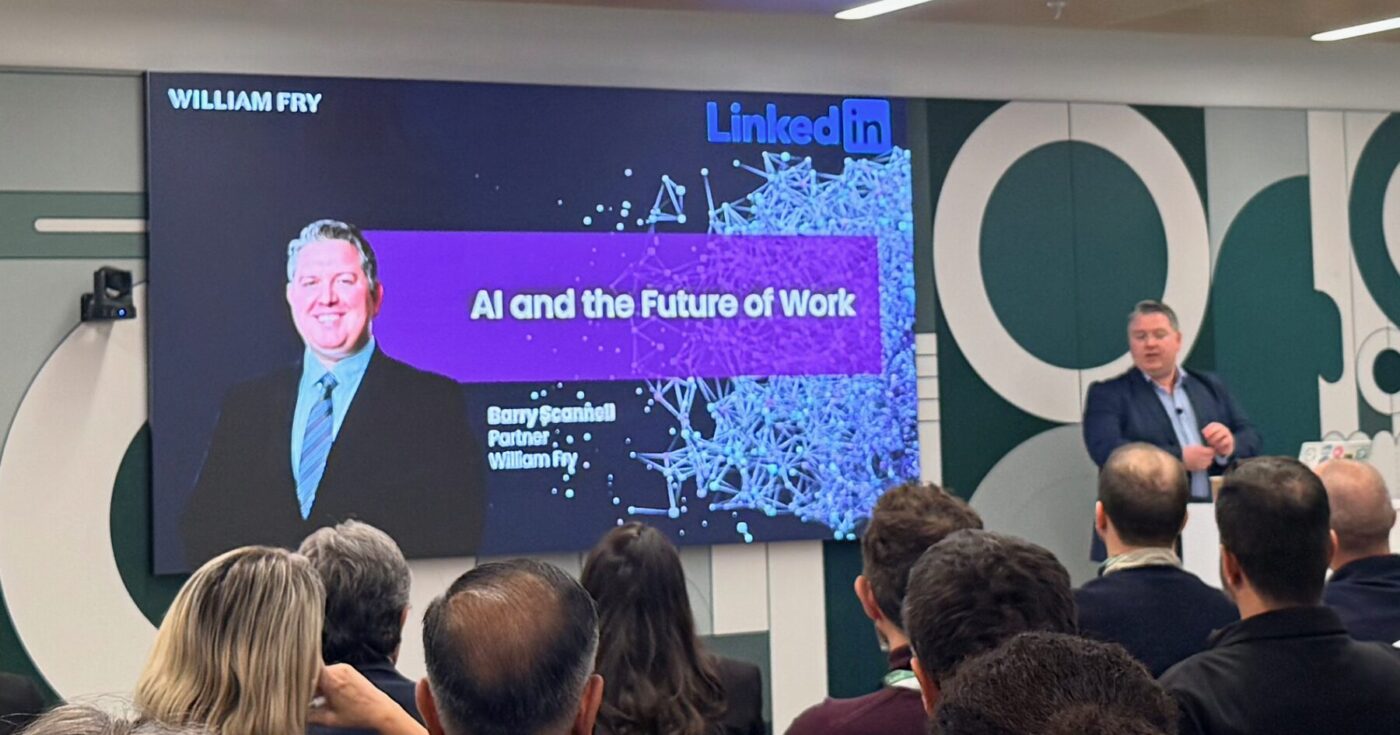
Dr Barry Scannell, Partner at William Fry, spoke on AI and the Future of Work, outlining how artificial intelligence is reshaping labour, employment law, and corporate governance. His message was clear: the next wave of innovation must be built on trust, fairness, and human oversight.
With the EU AI Act classifying HR and worker management systems as “high-risk”, organisations will soon face binding obligations for explainability, bias testing, and human review. GDPR principles remain central: transparency, data minimisation, and the right to human intervention.
Yet Dr Scannell’s tone was optimistic. He described AI not as a replacement for human capability, but as a catalyst for new kinds of value. Automation will target repetitive work, while augmentation will amplify human decision-making. As he put it, “Rights, safety, and fairness form the durable basis for adoption at scale.” The real opportunity is with organisations that balance innovation with accountability and invest in people who can oversee and guide intelligent systems.
A world in transition
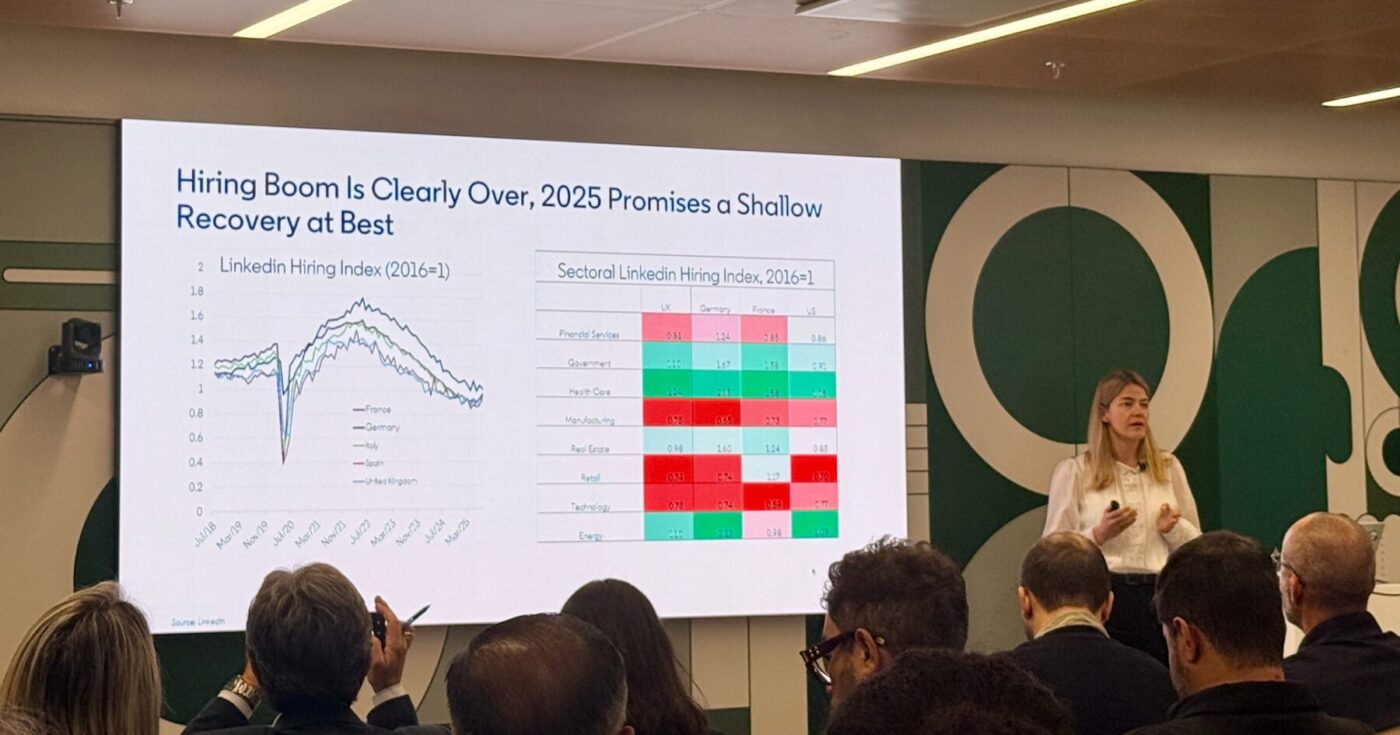
Building on that foundation, Tamara Basic Vasiljev, LinkedIn’s Head Economist for EMEA, turned to the macroeconomic picture. Her EMEA Economic Outlook presented a cautiously optimistic 2025: global GDP growth forecast at 2.7%, with the eurozone and UK both around 1.3%.
After a turbulent few years, Europe is seeing some positive economic trends such as easing inflation, investment support, and strong household balance sheets. However, the post-pandemic hiring boom has faded. The LinkedIn Hiring Index shows that while unemployment remains low, hiring activity is flattening in key markets. Sectors like healthcare and energy are still thriving, while technology and manufacturing are stabilising at lower levels.
Yet there’s a silver lining. Labour market tightness is encouraging entrepreneurship, with more professionals starting businesses and changing roles more often. This shift shows growing confidence in mobility and a desire for autonomy. As Tamara summarised, AI may be causing disruption, but it is also creating new opportunities. The most dynamic economies will be those that adapt quickly to the changing skills landscape.
The power of people in the age of AI
That focus on adaptability led to Francesca Felet, LinkedIn’s Director of Global Insights, whose presentation, The Power of People in the Age of AI, highlighted both the scale and the human side of LinkedIn’s data.
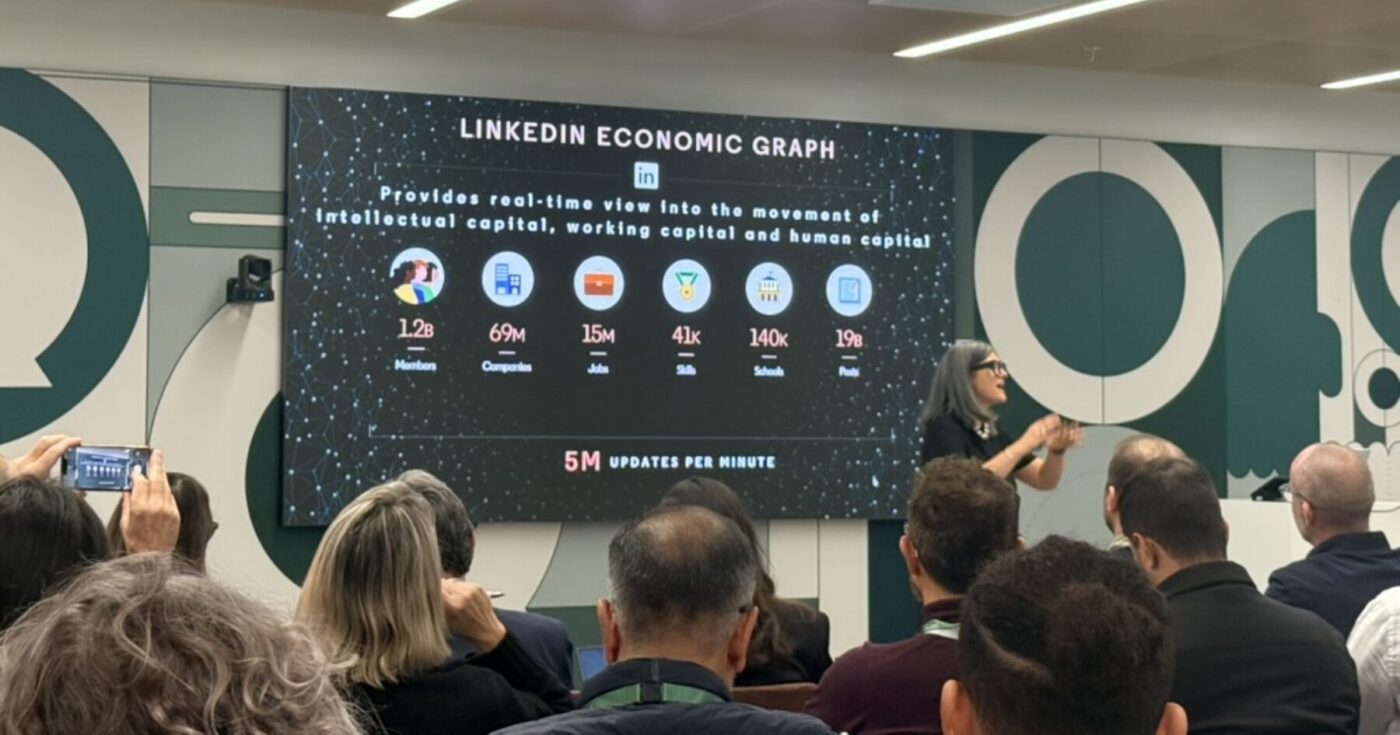
Drawing from the LinkedIn Economic Graph, which maps 1.2 billion members, 69 million companies, and 41,000 skills updated 5 million times per minute, Francesca explored how AI is transforming work across every level of the organisation. But her central point was that AI is only as powerful as the people who shape it.
She identified three interlocking transformations:
- AI-powered transformation of work, with 76% of global businesses using generative AI reporting major time savings.
- Skills-centred transformation of the workforce, as 70% of skills required for most jobs are expected to change by 2030.
- Learning-driven transformation of the workplace, where continuous upskilling and reskilling become essential for agility and growth.
The skills that will define the next decade, Francesca explained, are a mix of human and technical abilities: relationship-building, communication, strategic thinking, and AI literacy. AI may boost productivity, but it is people, with their empathy, adaptability, and curiosity, who drive progress.
Creativity and connection in the AI era
Niklas Fazler, Senior Content Solutions Consultant at LinkedIn, explored how AI is transforming the content value chain, from strategy and storytelling to design and delivery.
In his session, Content & Messaging Matter, Niklas challenged the idea that AI undermines creativity. Instead, he argued that AI enables a new era of collaboration, where tools can enhance ideation and help brands connect with their audiences in smarter ways.
The best-performing content on LinkedIn, he revealed, shares key traits:
- Context-aware: it taps into current trends and platform culture.
- Unified: it maintains a consistent creative thread across all brand dimensions.
- Emotive and relatable: it builds human connection through humour, authenticity, and empathy.
Internal data shows that humorous content garners 65% higher engagement, and emotionally resonant storytelling boosts brand memorability. The takeaway for marketers and recruiters is that AI can help generate ideas, but only humans can create real meaning.
AI at work: transforming hiring and productivity
LinkedIn’s product leaders Hari Srinivasan (VP of Product) and Lisa Molan (Product Marketing Director) brought the theme of AI from concept to reality.
On day one, Hari set the stage with a vision for how LinkedIn is reimagining the role of AI across the talent lifecycle. Rather than viewing automation as an endpoint, he described it as an enabler of human potential — technology designed to eliminate friction, accelerate insight, and free people to do more meaningful work.
That philosophy came to life on day two, when Lisa took us deeper into the product innovations making it happen. From sourcing to learning, AI is being embedded in ways that feel less like tools and more like collaborators. The standout example was the LinkedIn Hiring Assistant — a generative AI partner that searches, screens, and even crafts tailored outreach messages. Built on the world’s richest professional data, it’s helping recruiters find the right people faster while improving engagement quality.
Lisa’s message was clear: when used responsibly, AI doesn’t take the recruiter out of the process — it puts them back at the centre. The recruiter becomes strategist, connector, and brand ambassador, supported by technology that does the heavy lifting behind the scenes.
Together, Hari and Lisa painted a picture of a future where AI isn’t a disruption to fear but a capability to master — one that empowers recruitment teams to work smarter, move faster, and focus on the part of the job no machine can replicate: building human relationships.
Learning reimagined: from skills to career mobility
Ronan Murray, Senior Product Marketing Manager for EMEA & LATAM, closed the event with a look at how LinkedIn is connecting hiring, learning, and growth through the new LinkedIn Learning Career Hub.
Career Hub combines AI-powered learning, real-time skills intelligence, and internal mobility in one integrated experience. It helps organisations identify critical skills, personalise learning pathways, and guide employees toward future roles, all based on live data from LinkedIn’s Economic Graph.
The results speak volumes: companies using LinkedIn Learning see 26% higher retention, 18% more promotions, and 14% greater internal mobility. Employees who engage with learning features return five times more often and spend twice as long on the platform.
As Ronan described, the goal is to make learning a regular part of work, not just an afterthought. In a world where AI speeds up change, being able to learn new skills quickly is the real sign of a resilient organisation.
The path forward
Throughout every session, from policy and economics to people, creativity, and product, LinkedIn Partners Unite 2025 shared a clear message: AI is not a replacement for human ingenuity; it reflects it.
The future belongs to those who use AI to remove obstacles, find insights, and spend more time on what people do best: connecting, guiding, creating, and leading.
For recruitment agencies, this is a pivotal moment. The tools emerging today, from LinkedIn Hiring Assistant to intelligent learning systems, point to a future where recruiters become more strategic. Productivity gains will come from working smarter, not just harder. The most successful agencies will be those that combine human empathy with data-driven intelligence.
At Wave, we see the same evolution shaping our industry. From AI-powered candidate ranking in WaveTrackR to conversion-optimised recruitment websites built on WaveSites, technology is helping recruiters focus on what truly drives success: people.
In Dublin, surrounded by partners, innovators, and friends, one truth stood out: the future of work is not about choosing between people and AI. It is about creating a world where both can thrive together.