Reporting Period: This report covers data from January 2026 and is published as the February 2026 Recruitment Trends Snapshot.
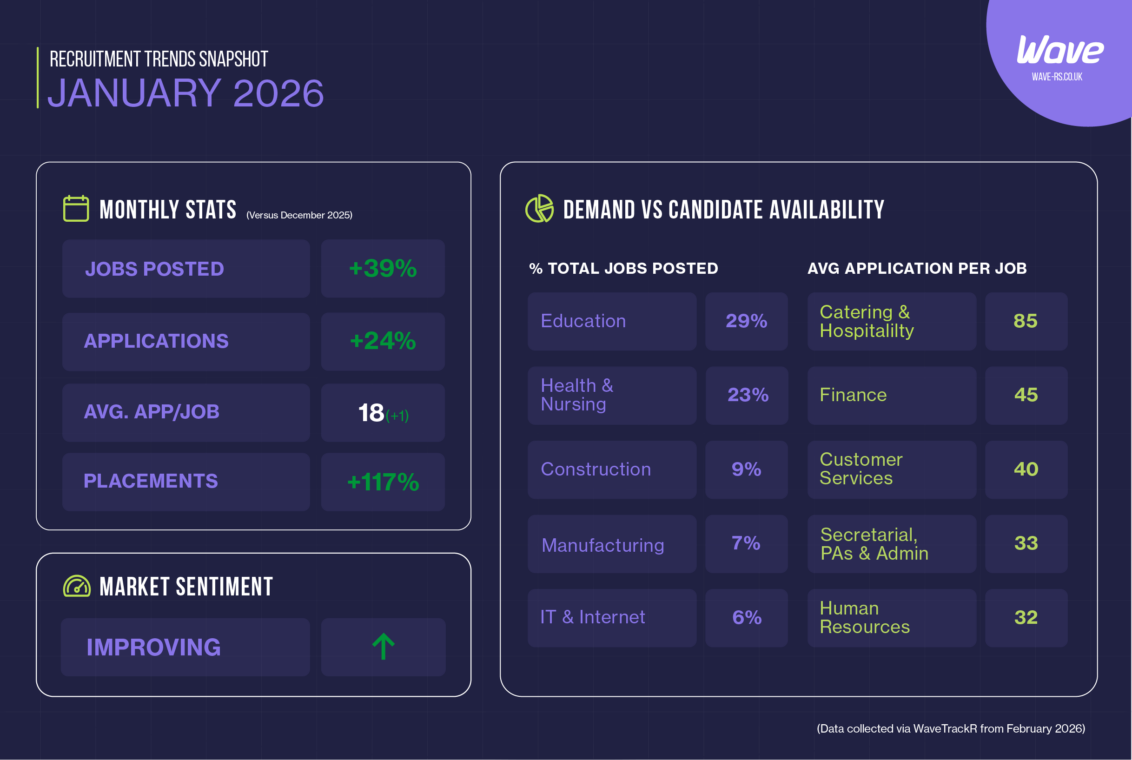
January 2026 marked a powerful rebound for the recruitment market, kicking off the year with renewed momentum across all key indicators. Job postings surged by +39%, applications rose by +24%, and placements more than doubled, increasing by +117%. The average number of applications per job edged up slightly to 18, indicating a reactivation of candidate engagement alongside continued hiring appetite.
Market sentiment is improving, with strong recruiter activity, growing candidate confidence, and a promising start to Q1.
Note: This edition introduces a new format to better reflect both recruiter demand and candidate behaviour. The report now pairs job posting data with average applications per job by sector, giving clearer visibility into market imbalances.
✉️ Get this data via email by subscribing to the Wave Newsletter
Monthly Recruitment Stats (vs December 2025)
- Jobs Posted: +39%
- Applications: +24%
- Average Applications per Job: 18 (+1)
- Placements: +117%
Recruitment Demand vs Candidate Availability by Sector
A new addition to this report is a breakdown of sector-level demand and candidate competitiveness, highlighting the balance (or mismatch) between jobs posted and applications received.
The top five industries by jobs posted were:
- Education (29%)
- Health & Nursing (23%)
- Construction (9%)
- Manufacturing (7%)
- IT & Internet (6%)
The industries with the highest average applications per job were:
- Catering & Hospitality (85)
- Finance (45)
- Customer Services (40)
- Secretarial, PAs & Admin (33)
- Human Resources (32)
Oversupplied Roles: Roles in Catering & Hospitality, Finance, and Customer Services attracted the highest number of applications per job, suggesting high competition and strong candidate interest.
Undersupplied Sectors: Education and Health & Nursing continue to dominate job postings, but did not appear in the top five most-applied-for sectors, indicating ongoing talent shortages.
Key Takeaways
Key insights from February’s recruitment data highlight where demand is rising and where candidate shortages remain most acute.
- The sharp increase in placements reflects both higher recruiter activity and greater hiring efficiency.
- Job boards and other traditional sourcing channels likely benefited from the spike in applications, especially in oversupplied sectors.
- While overall application volume is up, the average applications per job remain moderate, suggesting that candidate supply, though improving, has not yet caught up with demand in some core sectors.
- The Education and Healthcare sectors remain critical pressure points where job supply continues to outstrip candidate availability.