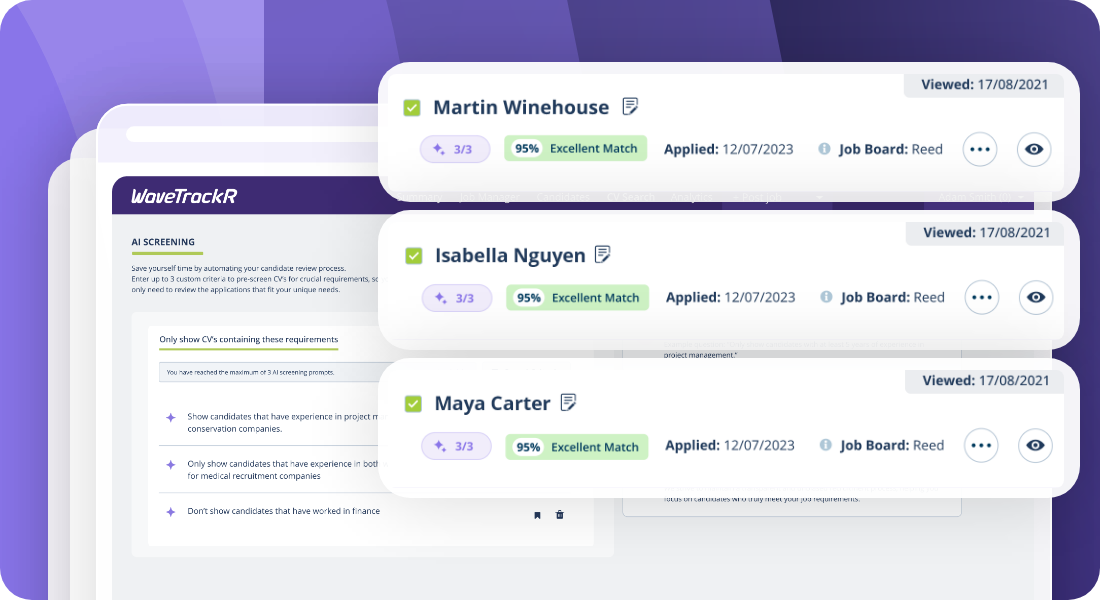
Applications are higher than ever, and while that’s great for choice, it’s not great for time. Screening Statements in WaveTrackR help you quickly understand which candidates meet the essential requirements for your role, so you can focus your energy where it matters most.
Used well, those statements bring clarity, consistency, and a more structured shortlisting process. Used casually, they miss the chance to do the heavy lifting for you.
This guide walks you through how to make each statement work at its best.
Start With the Essentials
Every role has a few requirements that genuinely make or break suitability. With only three statements available, these essentials are exactly where your focus should go.
Your goal is to choose the three things that reliably signal whether someone can do the job: core responsibilities, key experience, essential tools, or relevant environment exposure.
Strong essential statements prevent your shortlist from being dominated by people who don’t match the foundations of the role.
Examples:
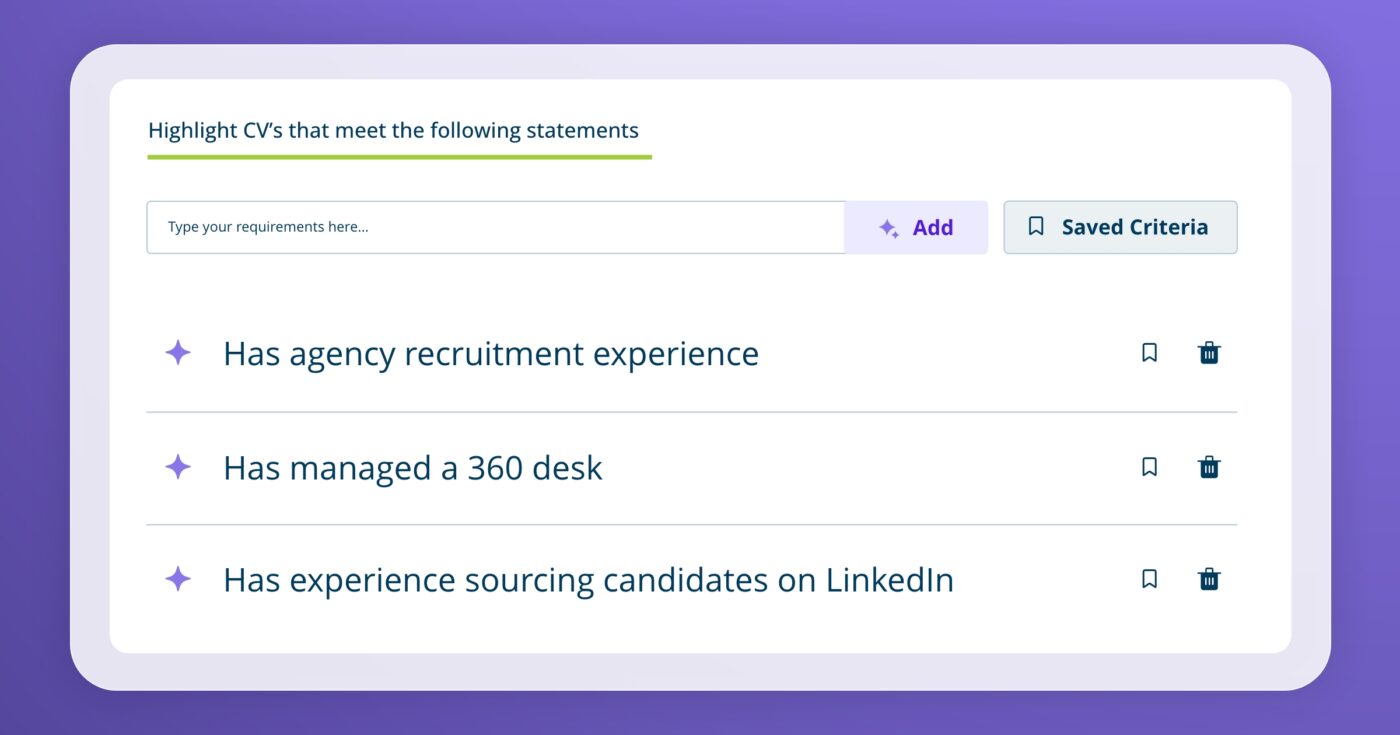
“Has agency recruitment experience”
“Has managed a 360 desk”
“Has experience sourcing candidates on LinkedIn”
Three statements — all describing core, non-negotiable capability.
One Statement Should Mean One Thing
Because you only have three Screening Statements, combining two or three ideas into one might feel efficient. But it usually makes the statement far less effective.
One Screening Statement should represent one clean requirement. The moment you merge skills, responsibilities, or tools into a single sentence, you dilute the clarity of what you’re assessing.
If something matters enough to influence your decision, it should stand alone.
Not ideal (too many ideas in one):
“Has experience with bookkeeping and payroll”
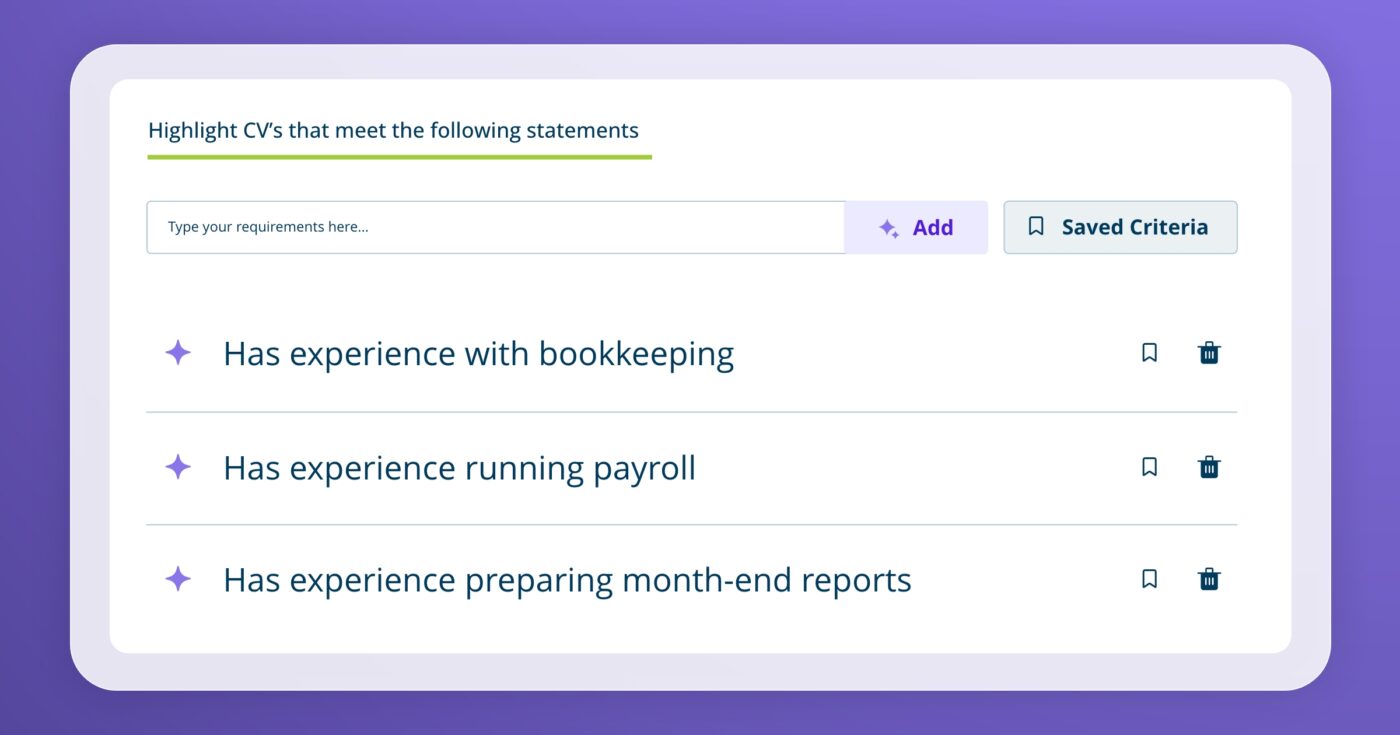
Better split (choose the three that matter most):
“Has experience with bookkeeping”
“Has experience running payroll
“Has experience preparing month-end reports”
Keep Statements Clear and Concise
Clarity is your biggest advantage. Long, layered statements tend to hide what you’re really looking for, and they make it harder to create consistency across similar roles.
Short, specific, and unambiguous statements are easier to evaluate and more effective for shortlisting.
Think: “What is the simplest possible way to express this requirement?”
Examples:
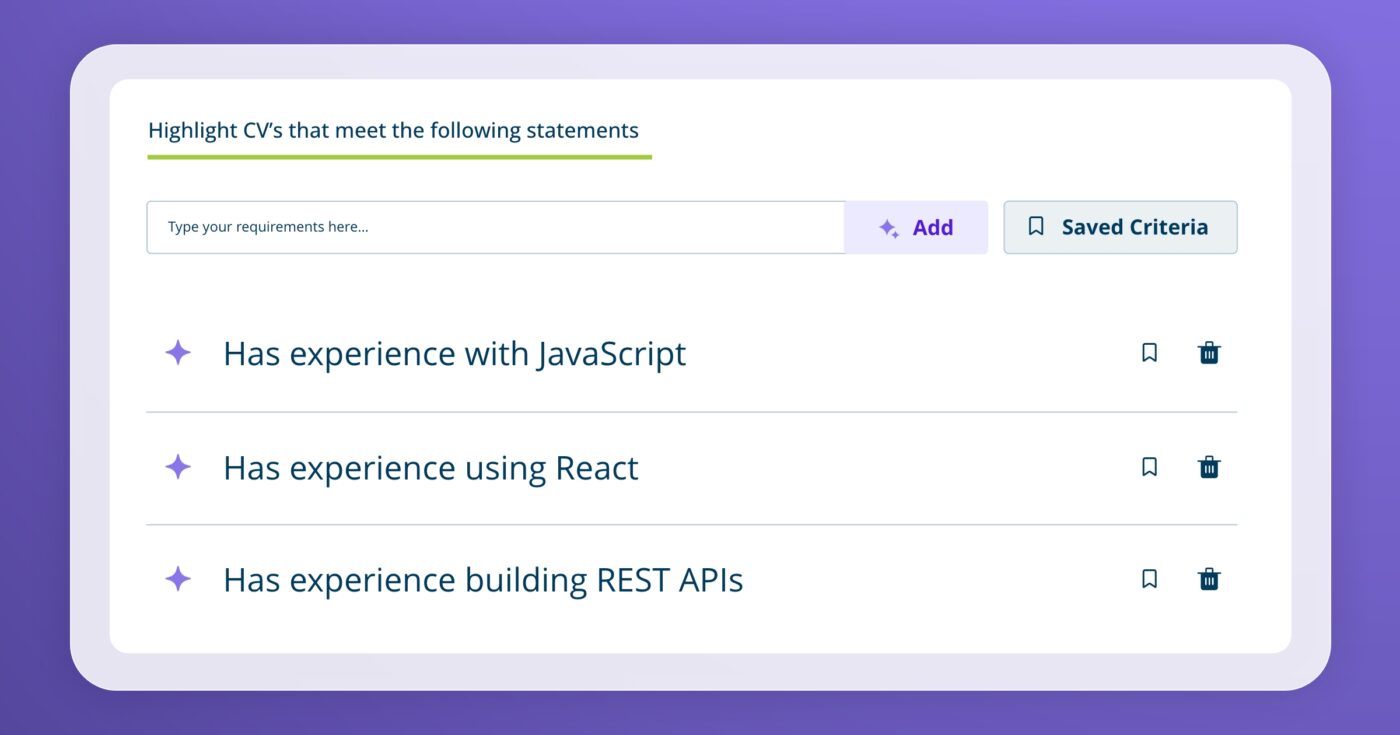
“Has experience with JavaScript”
“Has experience using React”
“Has experience building REST APIs”
Three statements — each one a direct signal of capability.
Avoid:
“Has strong experience building full-stack applications using React, Node.js, and AWS while managing CI/CD pipelines end to end”
This is too broad to use as a single statement and too complex to match reliably.
Match the Detail to the Role
Because you can only use three statements, tailoring their level of detail to the job type becomes essential.
For high-volume roles, broader essentials work best. You’re not trying to screen for niche skills — you’re trying to establish basic suitability quickly.
For specialist roles, your statements need to be more specific, giving you clarity on the technical requirements that separate good candidates from great ones.
Examples:
High-volume:
“Has customer service experience”
“Comfortable handling phone enquiries”
“Has basic computer skills”
Specialist:
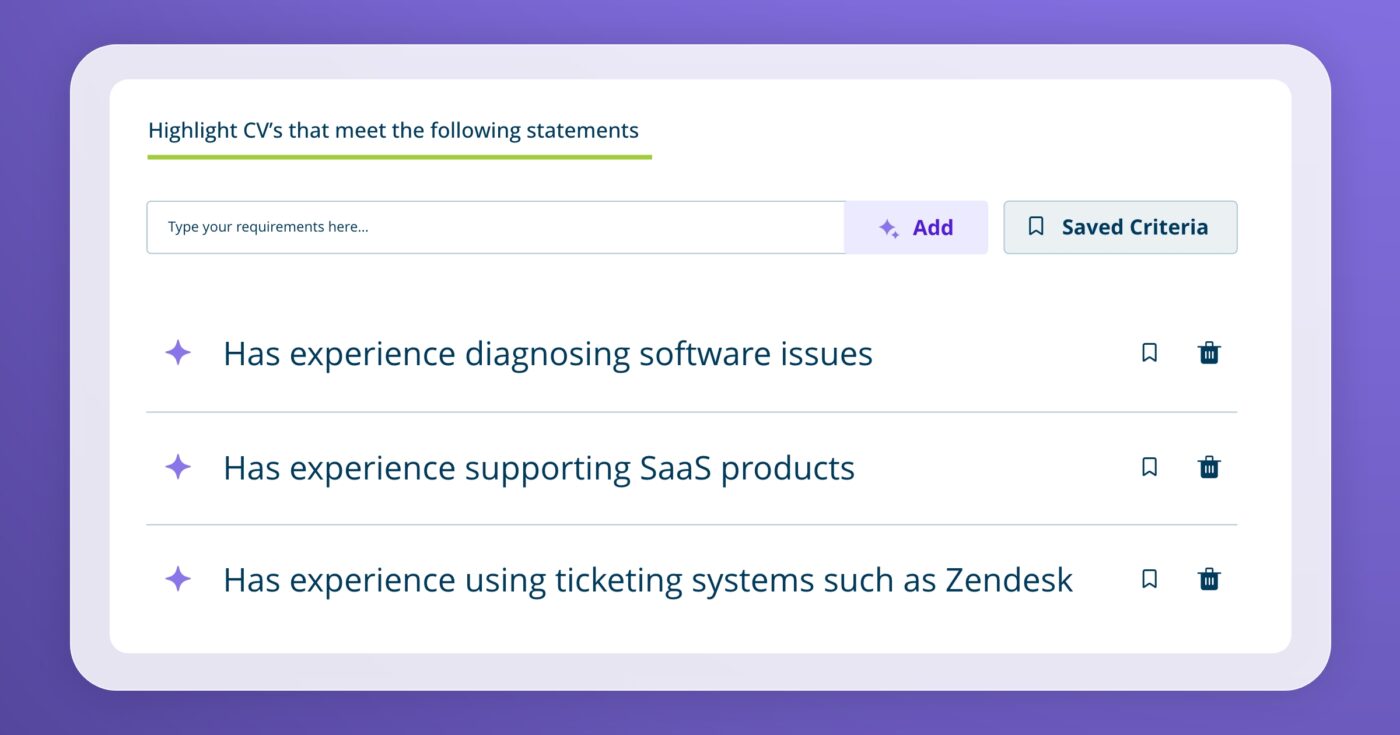
“Has experience diagnosing software issues”
“Has experience supporting SaaS products”
“Has experience using ticketing systems such as Zendesk”
Role type dictates detail level — your statements should reflect that.
Reflect Your Job Description
Screening Statements should always reinforce what the job description defines as essential. If a requirement appears in the JD as a must-have, it deserves consideration as one of your three statements.
If something is “preferred” or “nice to have”, it shouldn’t take up one of your limited statement slots.
This ensures fairness, transparency, and alignment between what candidates see and how you shortlist them.
Examples:
Essential in the JD:
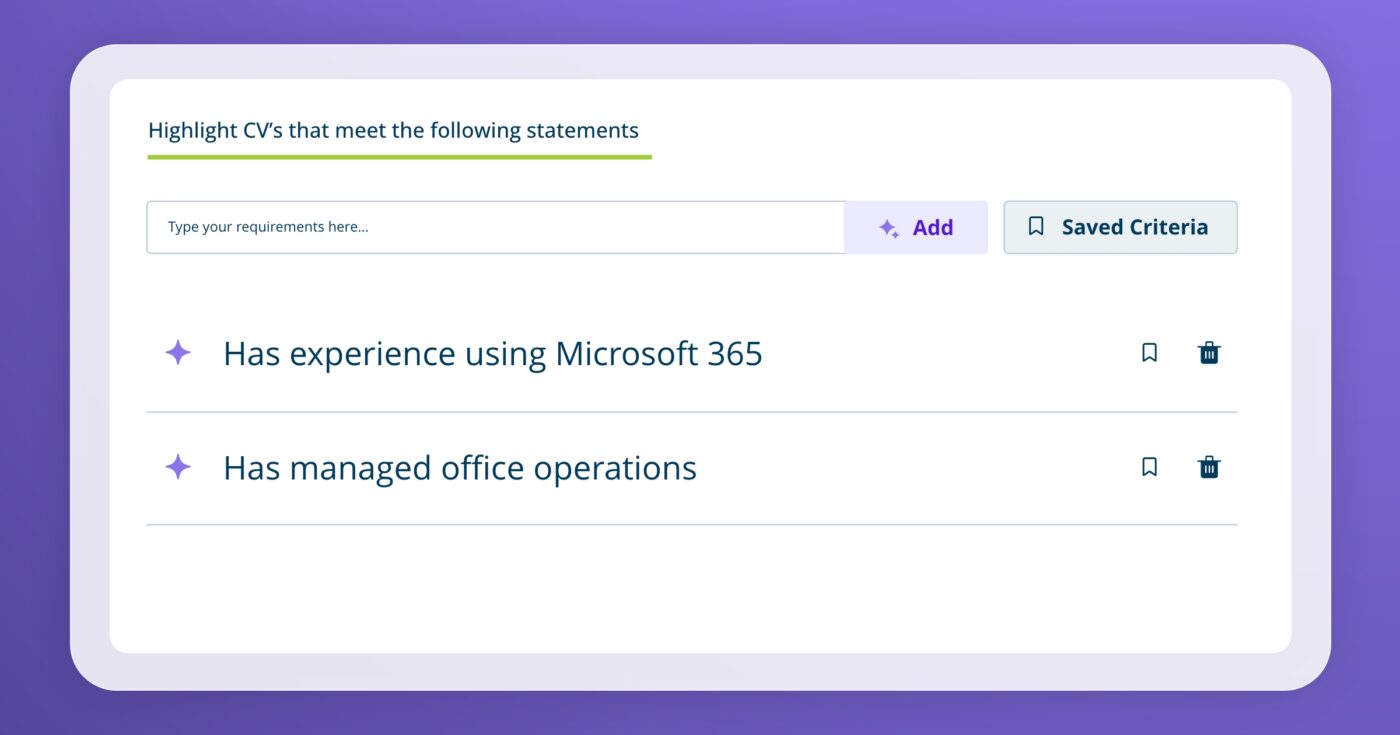
“Experience using Microsoft 365”
→ Screening Statement:
“Has experience using Microsoft 365”
Another essential requirement:
“Has managed office operations”
→ Screening Statement:
“Has experience managing office operations”
Preferred but not essential in the JD:
“Experience organising events”
→ Do not use a Screening Statement slot for this.
Refine as You Learn
Your three Screening Statements don’t need to be perfect the first time. In fact, they get better with every hire.
After each role, look back at which statements genuinely helped identify high-quality candidates and which ones didn’t meaningfully influence your decision.
Refining wording — or even swapping one of your three statements for something more targeted — strengthens your future hiring for similar roles.
Examples:
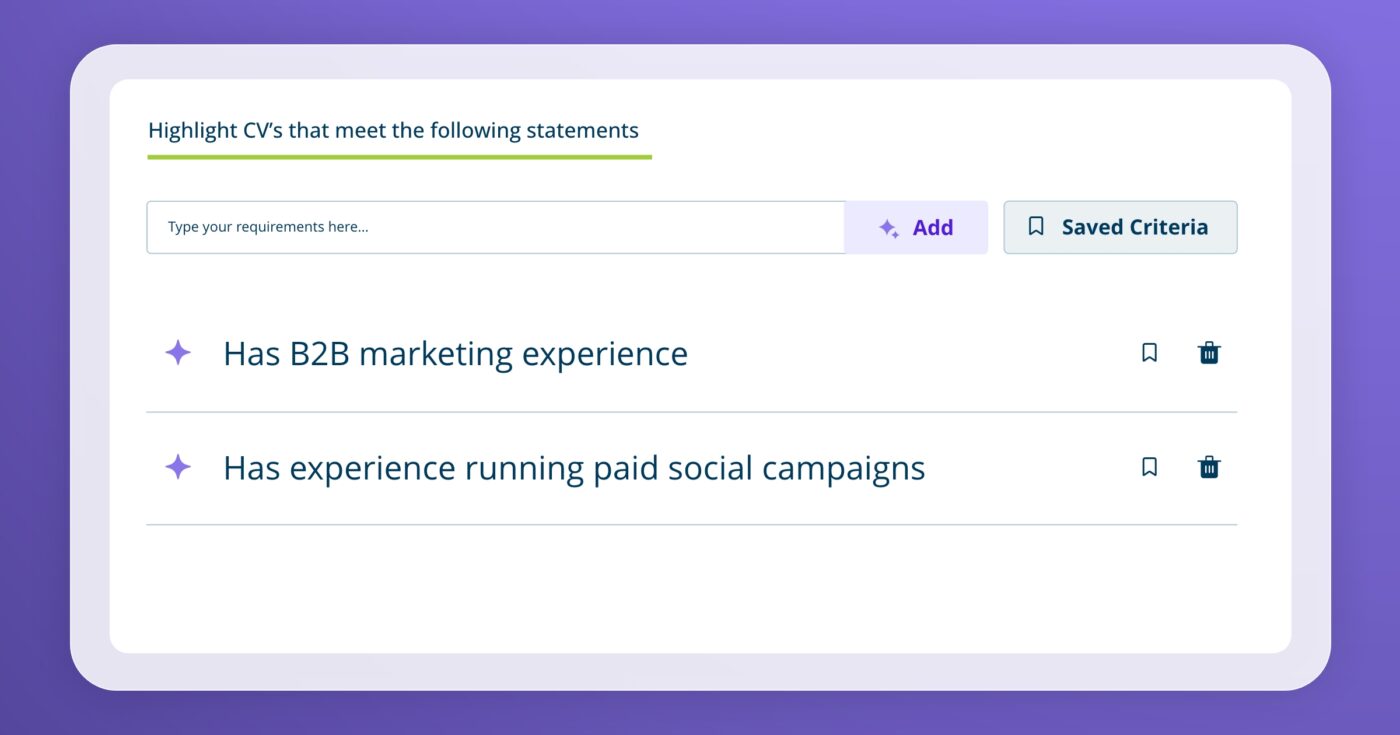
Adjusting “Has marketing experience” → “Has B2B marketing experience”
Changing “Has social media experience” → “Has experience running paid social campaigns”
Creating a statement template for recurring Marketing Manager roles
Consistency improves accuracy. Refinement strengthens both.
Keep It Fair and Relevant
With only three Screening Statements, it’s important that each one reflects a job-related requirement and nothing personal or sensitive.
Anything unrelated to the role is not just unhelpful — it takes space away from a genuinely relevant statement.
Examples:
Appropriate (tie directly to job):
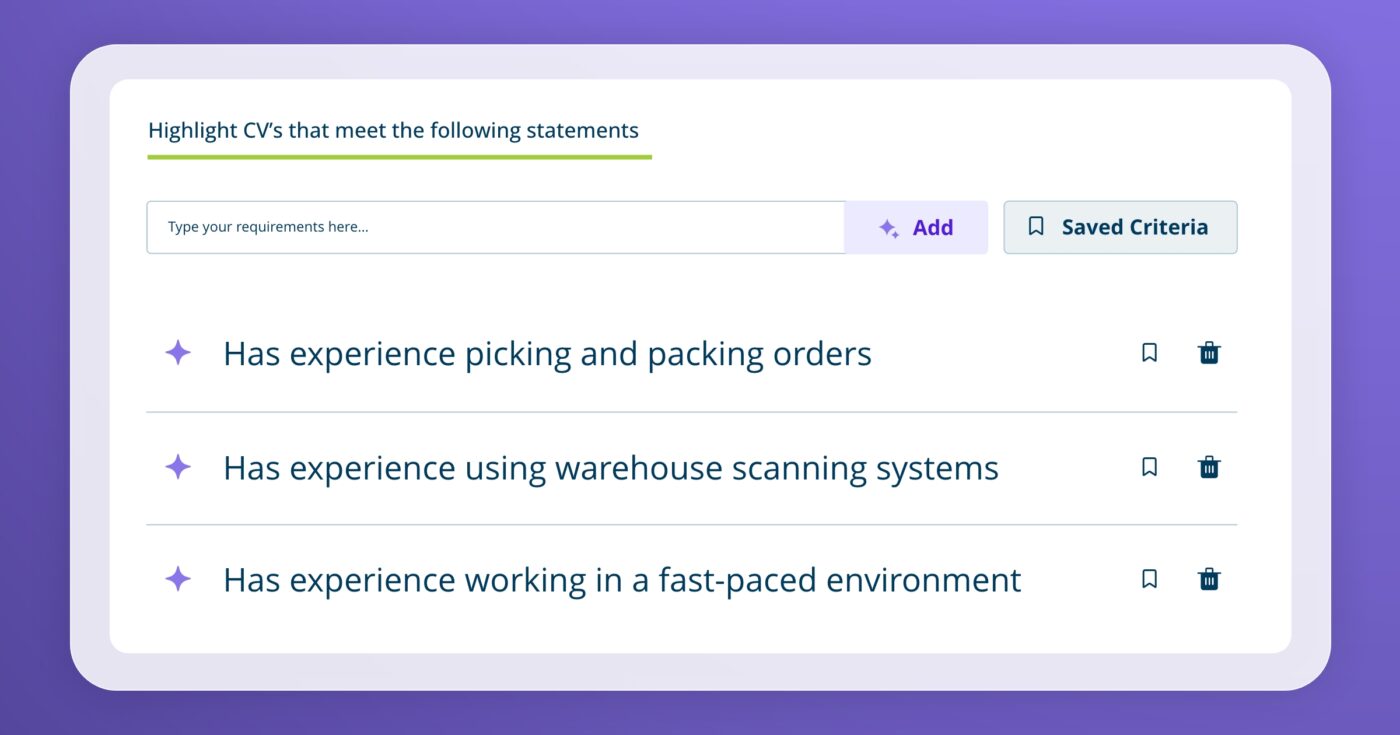
“Has experience picking and packing orders”
“Has experience using warehouse scanning systems”
“Has experience working in a fast-paced environment”
Not appropriate (not tied to job requirements):
“Has access to a car” (unless essential for shift/location access)
Anything related to age, ethnicity, health, personal circumstances, etc.
Three statements — all focused, fair, and relevant.
Build Screening Into Your Shortlisting Flow
Three Screening Statements give you a simple, reliable structure for prioritising your review process — especially when applications come in quickly.
This isn’t just a filtering tool; it’s a way to create a repeatable, fair shortlisting rhythm across your team.
Examples:
Candidates meeting all 3 statements go into your high-priority shortlist.
Candidates meeting 2 out of 3 form your secondary review group.
Candidates meeting 1 out of 3 might still be worth exploring if they offer strong transferable skills.
This turns hundreds of applications into a manageable, meaningful review order.
When you only have three Screening Statements per job, precision matters. Each statement needs to be clear, essential, and directly tied to what makes a candidate genuinely suitable. Used consistently, those three statements can completely transform the speed and accuracy of your shortlisting.
WaveTrackR helps you attract, screen and hire faster.
From job posting to shortlisting — get more done in one place.